
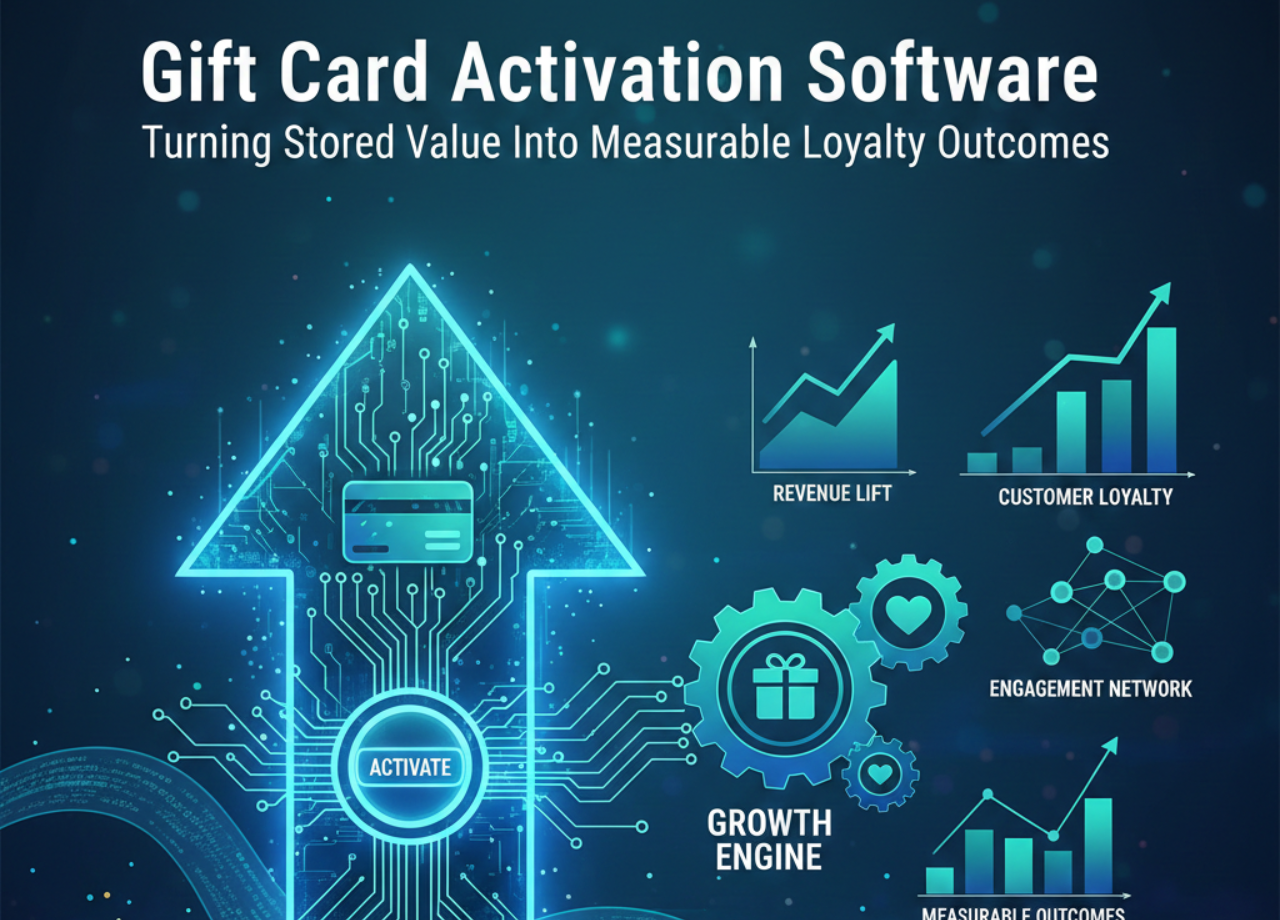
Gift cards used to be a convenient revenue boost during the holiday season, a nice-to-have element in a brand’s offering. Today, they’re a lever for sustained growth. When tied to smart activation software, they become measurable tools that extend the brand relationship beyond the initial purchase. They are no longer passive stored-value instruments but active drivers of retention, re-engagement, and customer data intelligence.
Businesses that once treated gift cards as a transactional add-on are now realizing that the activation moment is where loyalty begins. How that moment is managed, tracked, and optimized determines whether the stored value ends as a single redemption or multiplies into a series of high-value interactions.
The Missed Potential in Unoptimized Gift Card Programs
In many organizations, gift card programs remain disconnected from the broader customer strategy. Cards are sold, activated, and redeemed, but the behavioral data around those actions often stays trapped in siloed systems. Marketing teams rarely have access to the insights these interactions could yield.
The lost opportunity lies in what those activations represent: intent. Someone is signaling belief in the brand, either as a gifter or a recipient, and the system treating that event as a simple transaction wastes a chance to build an ongoing relationship.
The numbers back this up. Industry reports from 2024 show that over 50% of gift card recipients spend more than the card’s value when redeeming. Yet only a fraction of brands actively connect that behavior to subsequent marketing triggers or loyalty metrics. That gap between activation and engagement is where software-led optimization creates measurable outcomes.
Activation as the First Loyalty Touchpoint
Activation is more than a technical event; it’s a marketing moment. A recipient registering or activating a gift card is essentially announcing interest in the brand. This action should seamlessly connect with loyalty systems, allowing marketers to track engagement over time, attribute purchases, and understand retention curves tied to stored value.
Modern activation platforms capture rich data from this interaction: purchase channel, time of activation, customer location, and digital or in-store redemption preferences. When those data points flow into a loyalty CRM, they form the foundation for targeted engagement.
A simple workflow might look like this:
- A customer activates a gift card online.
- The system identifies them as a new profile or matches them to an existing one.
- They receive an invitation to join the loyalty program, along with relevant onboarding content.
- Subsequent purchases are tracked as part of a defined journey, linking stored value to retention metrics.
The sophistication of this connection determines how much incremental value brands can extract from what used to be a static product.
Why Stored Value Should Be Treated Like Marketing Currency
Stored value is not just unspent money. It represents potential engagement that has already been paid for. Treating it as marketing currency reframes how organizations allocate resources toward loyalty outcomes.
When activation data feeds into campaign engines, marketing can use stored value as a trigger for high-intent segments. For example, a spike in activations after a seasonal campaign might indicate a surge of new gifters, signaling an opportunity to target recipients with referral offers or cross-sell promotions.
Companies that measure redemption velocity (how quickly cards are used) and re-engagement rates after redemption often find strong correlations with customer lifetime value. The faster a card is redeemed, the higher the likelihood that the customer transitions into repeat behavior. Activation software capable of tracking these patterns across digital and physical environments provides the kind of visibility that turns stored value into a measurable growth channel.
Linking Gift Card Data to Retention KPIs
To quantify loyalty impact, organizations must integrate gift card activation software with analytics platforms that track downstream behavior. The most progressive programs now tie activation events to metrics like:

- Customer reactivation rate: How many lapsed customers return after receiving or redeeming a card.
- Incremental spend per card: The total purchase amount beyond the card balance.
- Post-redemption engagement: How often customers return within a defined period after using the card.
- Referral conversion: How often gift recipients convert to new loyalty members.
The goal is to attribute measurable outcomes to stored-value programs instead of treating them as indirect marketing benefits. When the software enables this level of visibility, gift cards evolve into a high-return investment rather than a low-margin necessity.
Redefining the Gift Card Experience Through Personalization
Personalization in loyalty programs is now expected across every stage of the customer journey, and gift cards are no exception. Digital activation interfaces can do far more than process balances—they can initiate personalized journeys based on context and intent.
For example, activation portals can be branded experiences that invite users to customize messages, choose future purchase recommendations, or opt into exclusive offers. When supported by data from previous campaigns, the activation process becomes a two-way exchange of value.
Retailers using advanced activation software have seen significant engagement lifts simply by personalizing post-activation messaging. A beauty retailer that introduced custom recommendations after activation reported a 25% increase in first-time redemptions within two weeks. That kind of responsiveness demonstrates how a traditionally transactional moment can be turned into a retention accelerant.
From Activation to Advocacy: Closing the Loyalty Loop
The most effective programs use gift card activations not only to retain customers but to convert them into advocates. Recipients who enjoy a seamless activation and redemption experience are more likely to buy and gift again. This feedback loop creates organic brand amplification that traditional paid channels struggle to achieve.
Brands with connected activation systems can identify high-engagement customers early and use behavioral triggers to nurture advocacy. A customer who redeems quickly and revisits within a short window could be invited to participate in referral campaigns or bonus-value promotions. Over time, this builds a network of active advocates fueled by stored value, not just discounts.
This concept extends beyond retail. Hospitality, gaming, and service industries increasingly rely on activation data to identify repeat guests, upsell premium experiences, or drive direct bookings. The thread connecting all of them is measurable loyalty derived from real behavioral signals.
The Technology Behind Effective Activation
Behind every successful loyalty-driven gift card program lies a flexible activation system capable of handling multiple use cases. Key features include:
- Real-time data sync: Activation events should update across POS, CRM, and loyalty databases without manual intervention.
- Fraud and balance protection: Security measures that safeguard both the customer experience and brand integrity.
- Multi-channel compatibility: Support for physical cards, digital wallets, and mobile app integrations.
- Campaign automation: Ability to trigger personalized campaigns immediately upon activation.
Platforms like Rediem have focused on building these integrations natively, allowing businesses to turn stored value data into actionable marketing and loyalty signals. The emphasis is not just on card management but on measurable engagement outcomes that drive growth.
Measuring the ROI of Activation-Driven Loyalty
Quantifying the ROI of gift card activation requires looking beyond immediate sales. Key indicators include:
- Redemption conversion: The percentage of activated cards that result in purchase within a set timeframe.
- Incremental sales uplift: Total additional spend relative to the stored value amount.
- Retention lift: Percentage increase in customer return rate compared to non-gift-card cohorts.
- Advocacy multiplier: Growth in new customers traced to gift card-related referrals or gifting events.
Companies using activation analytics to measure these outcomes often find their stored value programs outperform many traditional loyalty campaigns in cost efficiency. The reason is simple: the investment is already captured upfront. The software’s role is to unlock the residual value through data and targeted engagement.
The Strategic Advantage of Treating Activation as a Growth Channel
Forward-thinking organizations are reframing gift card activation as a primary acquisition and retention lever. It represents a unique intersection of prepaid revenue, brand advocacy, and measurable engagement. When managed with the same precision as other digital marketing channels, activation data becomes a source of competitive advantage.
The shift is already visible among top retail and hospitality brands. Gift cards are moving from seasonal revenue boosters to year-round loyalty assets. Their value is no longer measured solely by sales volume but by their ability to sustain customer relationships, drive referrals, and generate incremental spend.
Smart activation software makes this shift possible. It bridges the gap between stored value and loyalty metrics, turning what was once a static financial tool into a living engine for customer growth.